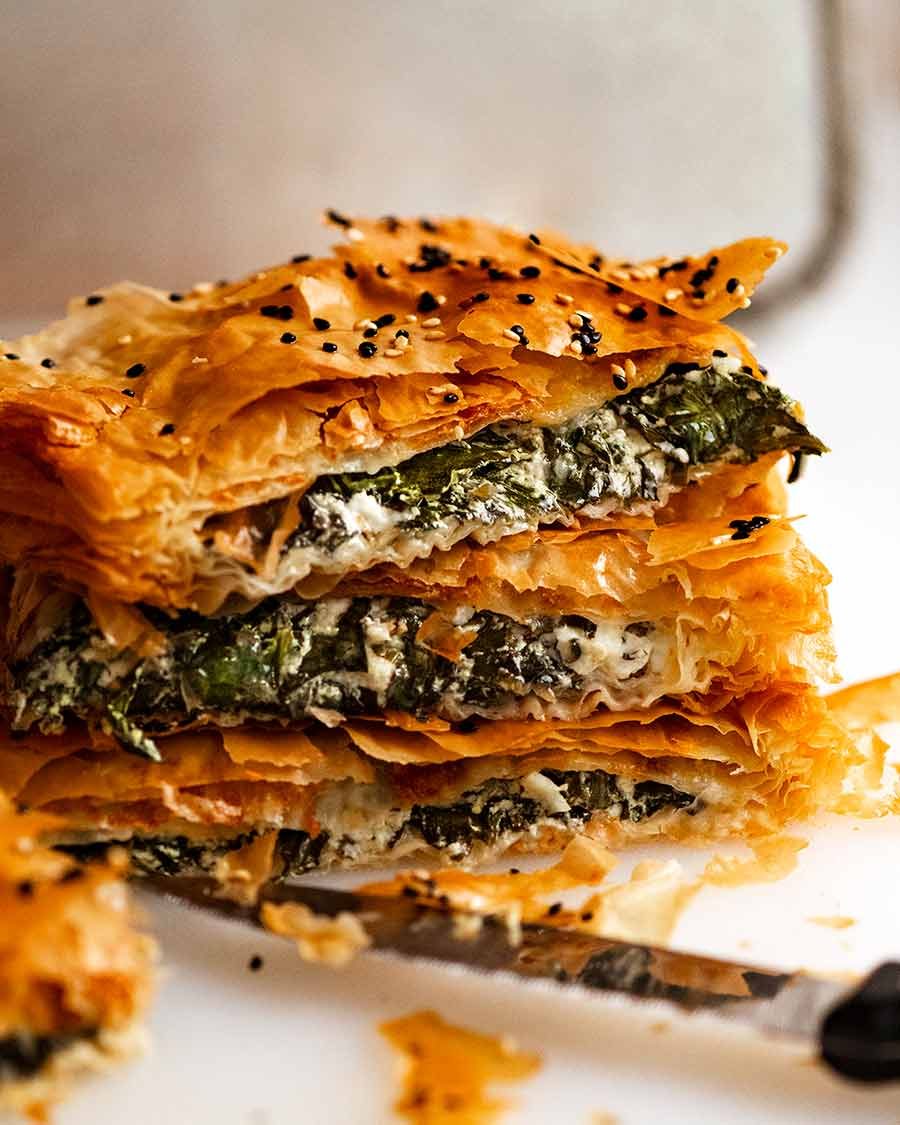
Unlocking the Authentic Spanakopita Experience: More Than Just a Pie
Few dishes evoke the warmth and hospitality of Greece quite like Spanakopita, the beloved Greek spinach pie. For many, the mere mention of its name conjures images of golden, impossibly flaky phyllo pastry, giving way to a rich, savory filling bursting with the flavors of spinach, feta, and fresh herbs. It's the aroma of dill and tangy cheese, mingled with the crisp, buttery scent of baked dough, that can instantly transport you to a sun-drenched Mediterranean kitchen, perhaps even to a cherished memory of a Greek Yiayia's (grandmother's) loving hands.
While the essence of Spanakopita lies in its simplicity and wholesome ingredients, achieving that truly perfect, restaurant-quality result at home can sometimes feel elusive. Many home cooks grapple with soggy bottoms, bland fillings, or phyllo that crumbles into a messy heap rather than neat, elegant layers. Fear not, because we're about to unveil the secrets that elevate a good greek spinach pie to a truly magnificent one, ensuring every bite is a symphony of flavor and texture. These are the insights that capture the spirit of tradition while leveraging smart techniques for modern kitchens. For deeper dive into traditional methods, you might enjoy reading Authentic Spanakopita: Yiayia's Secret for the Best Greek Spinach Pie.
The Raw Spinach Revolution: Why Fresh is Best for Your Greek Spinach Pie
One of the most transformative tips for creating the best Spanakopita comes down to a single ingredient: fresh spinach, used raw. This might seem counterintuitive to those accustomed to pre-wilting or boiling spinach, but it is a game-changer for flavor, texture, and crucially, preventing a soggy pastry base. When you use raw spinach, the leaves release their moisture during the baking process, wilting directly into the creamy, cheesy filling. This allows the filling to absorb the natural liquid, creating a wonderfully juicy texture without making the phyllo damp.
In contrast, pre-cooked spinach, especially frozen varieties, often holds onto excess water, even after thorough squeezing. This residual moisture can leach into your delicate phyllo layers, resulting in a disappointing, mushy bottom crust. Furthermore, fresh spinach, when allowed to cook within the pie, retains more of its vibrant, earthy flavor, which marries perfectly with the other ingredients. Skip the convenience bags of baby spinach and certainly avoid frozen spinach for this recipe. Invest in large bunches of robust, fresh spinach – you'll need around 600g (1.2lb) to yield about 300g (10oz) of trimmed leaves, once the tough stems are removed. This commitment to fresh, raw spinach is the first and perhaps most important step towards an unparalleled greek spinach pie.
The Secret to a Flawless, Flaky Crust: Cheese Between the Layers
Achieving that iconic, shatteringly crisp phyllo crust is a hallmark of an exceptional Spanakopita. But often, when sliced, the top layers of phyllo can fly apart, making for a messy presentation. The ingenious solution, a lesser-known but incredibly effective trick, involves using a finely shredded Greek cheese between the top layers of phyllo pastry. This isn't just about adding more flavor; it's a structural masterstroke.
Traditionally, Greek Kefalotyri cheese is used for this purpose. Kefalotyri is a hard, salty sheep or goat's milk cheese with a distinct flavor profile, somewhat akin to Parmesan but with its own unique character. When lightly sprinkled between the buttered phyllo sheets that form the top crust of your greek spinach pie, it melts slightly upon baking. This melted cheese acts as a subtle adhesive, binding the delicate layers together without making them heavy or tough. The result? A top crust that remains wonderfully flaky and buttery, yet holds together beautifully when sliced, preventing those annoying flying shards. If Kefalotyri isn't readily available, don't despair! Excellent substitutes include finely grated Parmesan, Pecorino Romano, or even a good quality Grana Padano. These hard, salty cheeses will perform a similar binding function, adding a layer of savory depth to your already delicious phyllo. This clever technique elevates the structural integrity and overall enjoyment of your homemade Spanakopita.
Crafting the Irresistible Filling: A Symphony of Greek Flavors
While the phyllo provides the glorious crunch, the heart of any great greek spinach pie lies in its filling. This is where a careful balance of flavors and textures comes into play, creating a savory blend that is both comforting and vibrant. The cornerstone ingredients are, of course, spinach and feta, a duo as quintessentially Greek as it gets. High-quality feta cheese is crucial here – opt for a block of genuine Greek feta, preferably stored in brine, for that authentic tangy, salty punch. Crumble it generously; its creaminess and sharp flavor are indispensable.
Beyond the spinach and feta, fresh herbs are non-negotiable. Dill and mint are the star players, adding an aromatic freshness that truly distinguishes Spanakopita. Do not be tempted to skip these or substitute with dried herbs; their bright, green notes are essential for the authentic taste. Greek yogurt (or any unsweetened plain yogurt) plays a vital role in the filling's texture. It adds a lovely tang and creaminess, ensuring the filling remains moist and juicy without becoming watery, a perfect partner for the raw spinach as it wilts. Finally, an egg acts as the binding agent, holding all these wonderful ingredients together as they bake. For more traditional insights and family secrets on the filling, check out Greek Spinach Pie Secrets: From Yiayia's Kitchen to Your Table.
Assembling Your Masterpiece: Tips for Perfect Phyllo and Baking
Working with phyllo dough can seem intimidating, but with a few simple tips, you'll master it. First, ensure your phyllo is properly thawed – ideally overnight in the refrigerator, then brought to room temperature for about an hour before use. Keep the unworked sheets covered with a damp cloth or plastic wrap to prevent them from drying out and becoming brittle. Clarity is key when it comes to butter; using melted clarified butter or ghee rather than whole butter will yield an even crispier, more golden crust, as the milk solids in whole butter can sometimes burn. Brush each sheet generously and evenly, ensuring complete coverage without oversaturating.
For assembly, typically you'll use more layers for the base (around 8-10 sheets) to create a sturdy foundation against the filling's moisture, followed by 5-7 sheets on top. Begin by layering buttered phyllo sheets in your baking dish, allowing them to overhang the sides. Once the base is built, spread your spinach and cheese filling evenly. Then, start layering the top sheets, remembering our secret trick: sprinkle a fine dusting of grated Kefalotyri (or substitute) every few sheets, especially towards the very top. This will help bind those critical top layers. Trim the overhanging phyllo and fold it neatly over the top, brushing with more butter. Before baking, score the top layers of the pie gently with a sharp knife, creating individual portions – this helps steam escape and makes for easier cutting after baking. Bake your greek spinach pie in a preheated oven at around 350°F (175°C) until it's deeply golden brown and the filling is set, usually 45-60 minutes. The aroma alone will tell you it's ready!
Serving and Savoring Your Spanakopita
The moment of truth arrives when your golden, aromatic Spanakopita emerges from the oven. For the ultimate experience, allow it to rest for 10-15 minutes before slicing and serving. This resting period allows the filling to set further and the layers to stabilize, making for cleaner cuts and preventing the filling from oozing out. Spanakopita is undoubtedly best served warm, straight from the oven, when its flaky crust and savory filling are at their peak. Garnish with a sprinkle of fresh parsley for a pop of color and an extra touch of herbaceousness.
This versatile greek spinach pie shines as a delicious appetizer, a satisfying side dish to grilled meats or fish, or even a light, wholesome meal on its own, perhaps accompanied by a simple Greek salad and a squeeze of fresh lemon. Leftovers, if you're lucky enough to have any, can be stored in an airtight container in the refrigerator for up to 3 days. To revive its crispy glory, reheat slices in a preheated oven at 350°F (175°C) until warmed through and the crust regains its crispness. While a microwave can warm individual slices, be prepared for a softer crust. It's generally not recommended to freeze Spanakopita, as the delicate phyllo dough tends to become soggy upon thawing, compromising that coveted flaky texture.
Embracing these simple yet profound techniques – from the raw spinach revolution to the clever cheese binding trick – will transform your homemade greek spinach pie from good to unforgettable. You'll not only create a dish that tastes authentically Greek but one that stands as a testament to thoughtful cooking and a dedication to exquisite flavor and texture. So, gather your fresh ingredients, roll up your sleeves, and prepare to bring the incredible taste of a perfect Spanakopita into your home, creating new traditions and delicious memories.
